
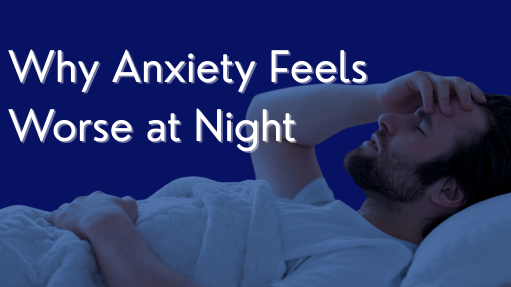
Many people notice that anxious thoughts feel louder when the day slows down. Evening can be a time of rest, but it can also be a time when worry shows up more clearly. The experience of laying awake at night, staring at the ceiling, and being too anxious to sleep is common, and it can be incredibly frustrating. Understanding why anxiety can intensify at night may help you feel more in control and more supported. Keep reading to find tips on how to reduce symptoms of anxiety so you can get better sleep.
The Shift From Busy Days to Quiet Evenings
During the day, your mind has plenty to focus on. Work, errands, parenting, and constant small decisions can keep your attention moving forward. When the evening arrives, those distractions fade. The quiet gives your mind more room to replay stressful moments or anticipate what might happen tomorrow.
This change in pace can make normal stress feel heavier. Without the structure of daytime responsibilities, it is easier for your brain to wander toward “what if” thinking.
Fatigue Makes Coping Harder
Studies show that when you are tired, it can be harder to manage emotions or redirect thoughts. Mental fatigue affects concentration, patience, and your ability to stay grounded. If your body and mind are already worn down, anxious thoughts can feel more intense than they might earlier in the day.
This is one reason nighttime worry can feel bigger than daytime worry. You may simply have fewer emotional resources available at the end of the day.
The Brain’s Natural Alarm System Stays Active
Your brain is built to scan for danger and remember anything that felt stressful or unresolved. At night, without other tasks keeping you busy, this internal alarm system may bring up concerns you were able to set aside earlier. This does not mean something is actually wrong or that there is an emergency. Instead, it reflects how the mind tries to protect you by reviewing situations or preparing for the next day.
For many people, this process becomes uncomfortable when the review turns into rumination or self‑criticism.
Evening Habits Can Influence How You Feel
Certain nighttime patterns can unintentionally raise anxiety levels. These might include:
- Scrolling on your phone late into the evening
- Drinking caffeine later in the day
- Working or responding to messages close to bedtime
- Skipping meals or eating irregularly
- Watching or reading stressful content before trying to relax
Small adjustments to your evening routine can sometimes ease physical tension and help your mind unwind more gently.
The Link Between Body Sensations and Worry
Anxiety often shows up through physical sensations such as a racing heartbeat, shallow breathing, or a tight chest. At night, when you are lying still, these sensations can feel more noticeable. If you are already worried about sleep or stress, the sensations may feel even stronger. This can create a cycle that makes it harder to settle down.
Simple grounding exercises can help interrupt the cycle, especially when you use them consistently.
Practical Ways to Ease Nighttime Anxiety
You do not need a complicated routine to support your evenings. Consider trying one or two small changes and noticing how they feel over time.
- Create a gentle wind‑down period. Even ten minutes of quiet activity can help your mind shift away from the pace of the day.
- Use slow, steady breathing. This can signal your nervous system to soften its alert state.
- Keep a notepad next to your bed. Writing down worries or tomorrow’s tasks can help your mind set them aside.
- Limit screen use before bedtime. Soft lighting, calm music, or light stretching may support relaxation.
- Be patient with yourself. Anxiety often improves with consistent habits, support, and time.
When to Reach Out for Support
If nighttime anxiety regularly disrupts your sleep or affects your daily life, you deserve care that can help you find more calm, restful sleep again. A mental health professional can help you explore what is fueling your anxiety and identify strategies that match your lifestyle and goals. Therapy, medication management, or a combination of both may be helpful, depending on your situation. Embrace Health offers therapy and medication management through secure telehealth. You can connect with a licensed clinician at a pace that works for you.
Reaching out is a sign of strength. You do not have to navigate nighttime worry alone.