
The so-called “winter blues” can be hard to navigate, but with the right knowledge base and support, you can stay focused on maintaining your mental health. The winter blues typically start in January. The holidays are over, routines shift again, daylight hours are short, and motivation can feel harder to access. It’s important to understand that the winter blues is not a diagnosis. It is a common emotional response to seasonal changes and life stressors that tend to cluster during the winter months.
Understanding what is happening and knowing when to seek support can make a meaningful difference to your mental health.
What Are the Winter Blues?
While the winter blues are related to Seasonal Affective Disorder (SAD), they are not the same thing. The winter blues describe a pattern of lower mood or energy that often shows up during colder, darker months. This pattern is typically more mild, which temporary feelings of sadness, while SAD is a clinically recognized depressive disorder, with more severe, persistent symptoms. People experiencing the winter blues may notice feeling more tired than usual, less motivated, or more withdrawn. Concentration may be harder, and activities that once felt enjoyable may take more effort.
For many, these symptoms are temporary and improve as daylight increases or routines stabilize. For others, symptoms can become more persistent or intense and may overlap with anxiety or depression.
The Difference Between the Winter Blues and Seasonal Affective Disorder (SAD)
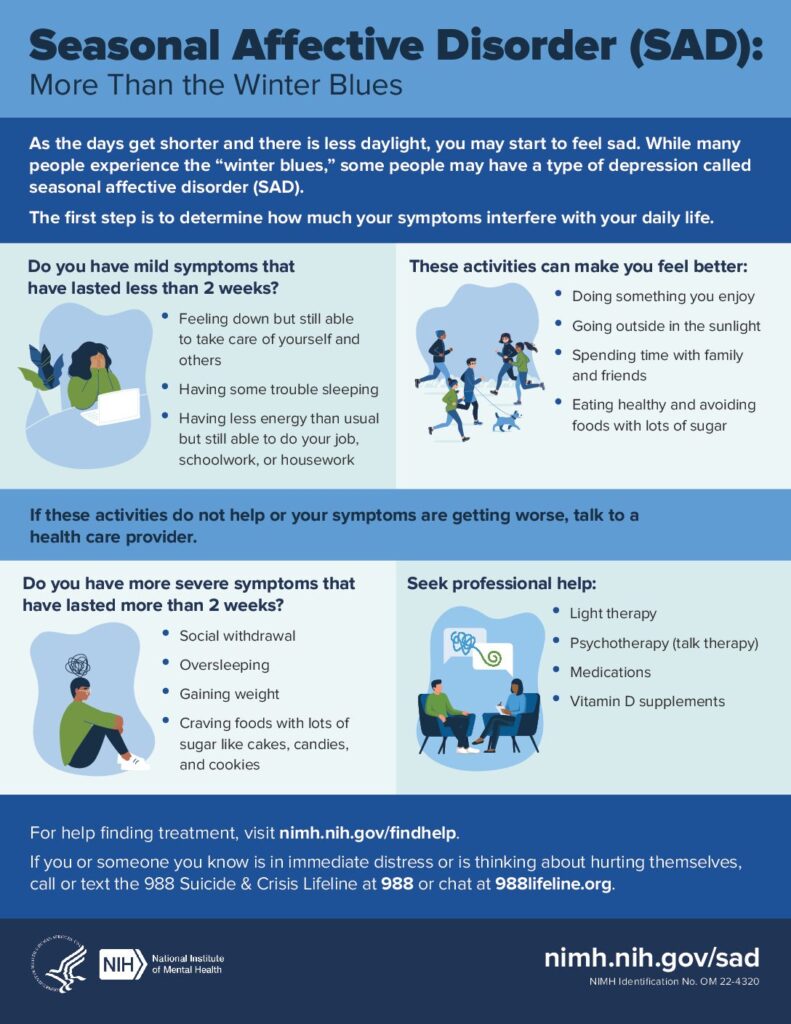
According to the National Institute of Mental Health, the first step in determining if you have the winter blues or seasonal affective disorder is to determine how much your symptoms interfere with your daily life. If you have symptoms that have lasted longer than two weeks, and include social withdrawal, oversleeping, weight gain, you could be experiencing SAD. You’re encouraged to seek professional help. Embrace Health offers a free consultation to help you determine if treatment could help.
Why Winter Can Affect Mental Health
Several factors contribute to seasonal mood changes:
Reduced daylight can disrupt sleep cycles and affect mood regulation
Colder weather often limits outdoor activity and social connection
Post-holiday transitions can bring financial stress or emotional letdowns
Pressure to start the year strong can lead to self-criticism when goals feel out of reach
None of these factors reflect a personal failure. They are common environmental and emotional stressors.
Supporting Your Mental Health During Winter
If you notice changes in your mood this season, small and steady supports can help:
Create gentle routines that prioritize sleep and daily movement
Seek natural light when possible, even short walks during daylight hours
Stay connected with others, even when it feels easier to withdraw
Adjust expectations and allow flexibility with goals
Practice noticing how you feel without judgment
If low mood, anxiety, or lack of interest continues for weeks or begins interfering with daily life, professional support can help. Reaching out early can prevent symptoms from becoming more overwhelming.
How Embrace Health Can Help
At Embrace Health, we believe mental health care should meet people where they are. Seasonal shifts can be challenging, and support is not only for moments of crisis. Therapy and psychiatric care can help individuals build resilience, understand emotional patterns, and feel more supported during difficult seasons.
If winter feels heavier this year, you do not have to navigate it alone. Use the Contact Us form to ask questions, or schedule a free mental health consultation today.